

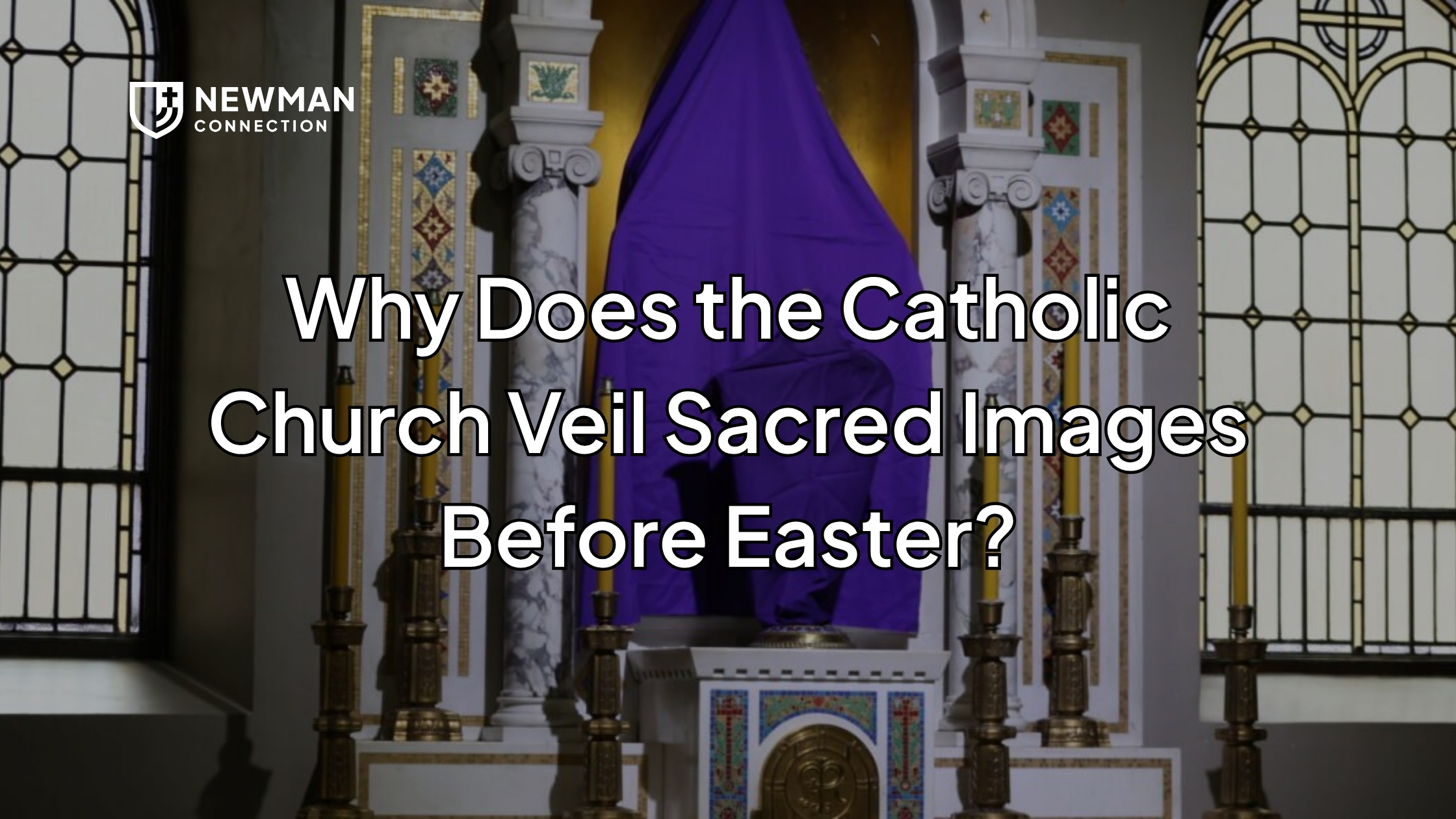

As Easter approaches, many Catholic churches begin to look different.
Statues disappear behind purple cloth. Crucifixes are covered. Sacred images that once filled the space now seem hidden.
If you’ve ever walked into a church during Passiontide and wondered why everything is veiled, you’re not alone.
This tradition is deeply meaningful and especially important for young Catholics to understand as they prepare their hearts during Lent.
What Is Passiontide?
Passiontide is the final two weeks of Lent, beginning on the Fifth Sunday of Lent and leading directly into Holy Week.
It is a time when the Church intensifies its focus on the suffering and sacrifice of Jesus Christ — His Passion.
Everything in the liturgy becomes more solemn, more intentional and yes, more hidden.
Why Are Sacred Images Veiled?
1. To Focus Our Attention on Christ’s Passion
During most of the year, sacred art helps lift our minds to heaven. But during Passiontide, the Church temporarily removes these visual aids.
Why?
So nothing distracts us from the central mystery: Christ’s suffering and sacrifice.
When statues and images are veiled, we’re invited to enter more deeply into what Jesus endured without comfort, without glory, and often, without being fully seen or understood.
2. To Reflect the “Hiddenness” of Christ
The veiling of images echoes a powerful moment in Scripture. In the Gospel accounts, as opposition to Jesus grows, He begins to withdraw and hide Himself from public view.
The Church mirrors this reality visually.
Christ, who is usually clearly visible in our churches, now appears hidden—just as He was in the days leading up to His crucifixion.
3. To Build Anticipation for Easter
There’s also a very human reason behind this tradition: we notice absence.
When something familiar is taken away, we long for its return.
By veiling sacred images, the Church helps us feel the longing for joy, beauty, and glory that will be fully revealed again at Easter.
And when the veils are finally removed, especially during the Easter Vigil, it’s not just visual.
It’s powerful.
It’s a reminder that resurrection follows sacrifice. That light breaks through darkness.
4. To Invite a More Interior Faith
In a world full of constant noise and visual stimulation, this tradition gently invites us inward.
Without images to rely on, we’re encouraged to pray more deeply, reflect more intentionally, and enter into a personal encounter with Christ.
For students, especially, this can be a meaningful reset, stepping away from distractions and into something deeper.
Why This Matters for Students and Families
Passiontide isn’t just a tradition; it’s an opportunity.
For high school and college students, this season is a chance to:
- Reflect on their own relationship with Christ
- Enter into the meaning of sacrifice and love
- Prepare their hearts for the joy of Easter
For parents and families, it’s a moment to:
- Start meaningful conversations about faith
- Experience the rhythms of the Church together
- Help young people see that faith is something lived, not just observed
Don’t Let This Season Pass By
The beauty of traditions like veiling reminds us that the Catholic faith is rich, intentional, and deeply formative.
But no one is meant to walk it alone.
At Newman Connection, we believe every student deserves to feel known, supported, and connected, especially during powerful seasons like Passiontide, Lent, and Easter.
Help your student get connected to a Catholic community where their faith can grow.

Support our mission so more young people can encounter Christ in a real and lasting way.

Because when students are connected, they don’t just observe traditions like this—
they begin to truly understand and live them.