

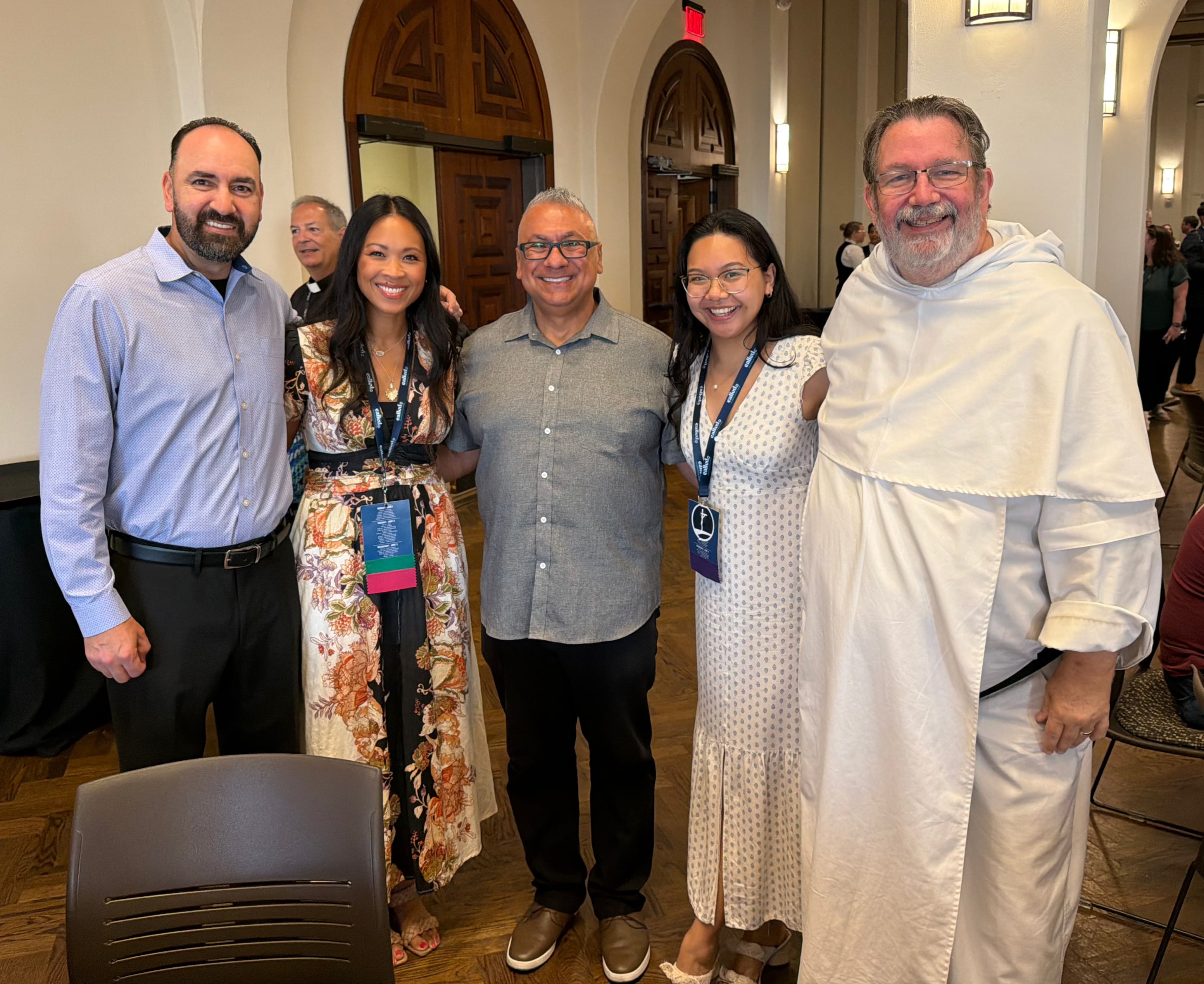

I left Called26 with pages of notes, highlighted quotes, and more ideas than I could fit into a single blog post.
As I reflected on the conference during my flight home, I realized my biggest takeaway was not a new strategy, program, or ministry model. It was a reminder of why campus ministry matters.
Over three sunny days on the gorgeous University of San Diego campus, campus ministers, diocesan leaders, clergy, religious, university staff, and ministry partners gathered around the theme of Listen, Teach, Send. As I listened to keynote speakers, workshop presenters, and conversations happening in hallways between sessions, I found myself hearing the same message over and over again.
Students are hungry to be known.
They are searching for meaning, belonging, purpose, and authentic relationships. More than that, they are searching for someone willing to see them, listen to them, and walk alongside them. In a culture that offers endless information but very little accompaniment, that search has become increasingly urgent.
1. Students Are Searching for More Than Information
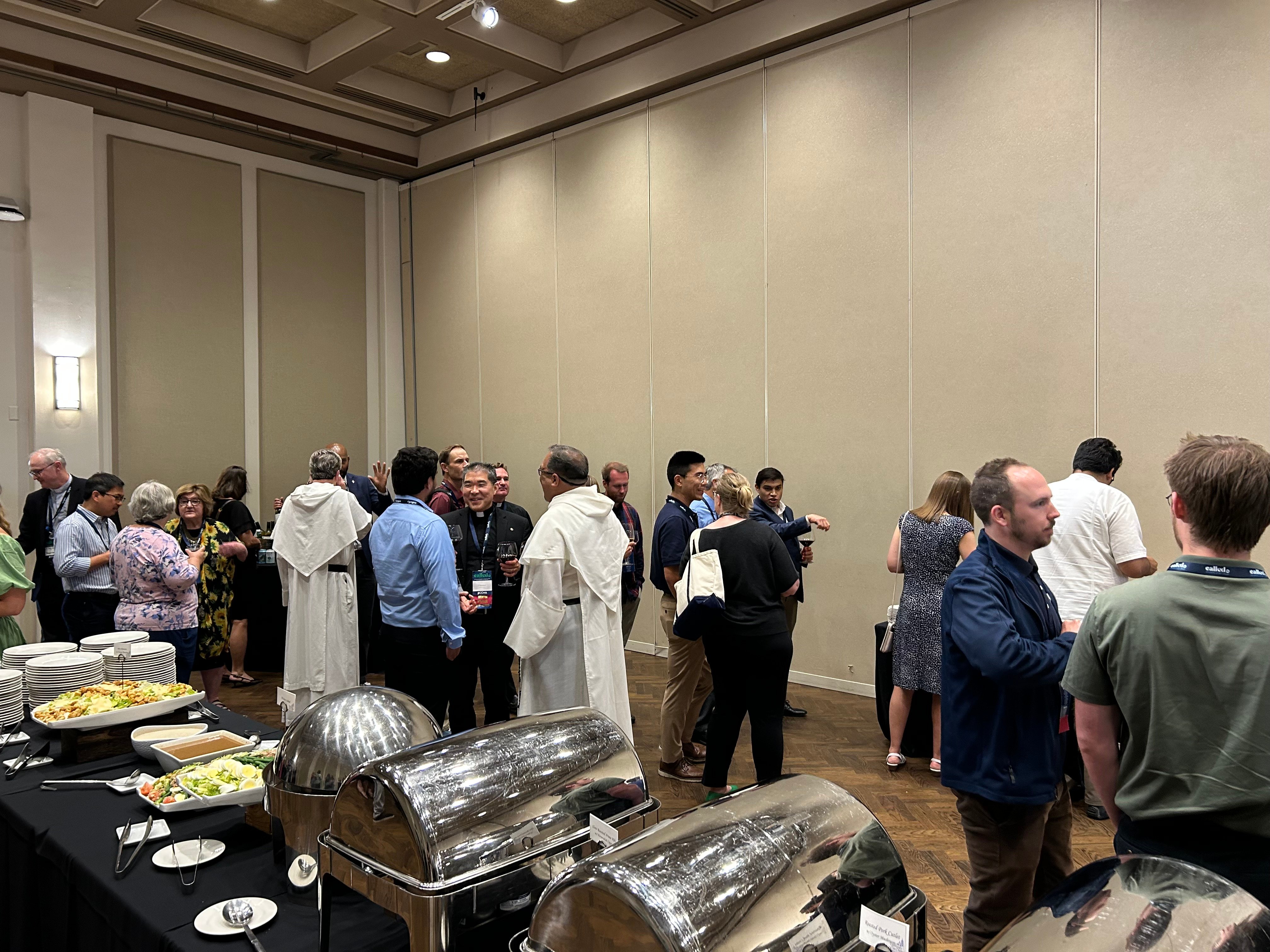
Today's students don't need more content. They need connection.
In her opening keynote, CCMA Executive Director Rosie Chinea Shawver described students as carrying "a deep, often unnamed hunger, a longing to be known, a search for something worth giving their lives to."
That phrase stayed with me throughout the conference because it captured so much of what I would continue to hear over the next three days.
Later in her keynote, Rosie observed that many students are wrestling with questions about "what makes them irreplaceable" in a world increasingly shaped by artificial intelligence. While the technology may be new, the deeper questions are not.
As a therapist, I learned that what people say they are struggling with is not always what they are really asking. Students may come seeking guidance about relationships, anxiety, career decisions, Church teaching, loneliness, or where they fit in a faith community. Often, underneath those conversations are deeper concerns: Do I matter? Do I belong? Am I loved?
Rosie challenged another common assumption when she said, "Students are not indifferent. They are wounded. They are wondering. They're waiting to see if the Church is actually interested in them."
Too often, we interpret disengagement as apathy when it may actually be uncertainty, disappointment, hurt, or a longing for authentic connection. In conversations with campus ministers across the country, I hear versions of this every day. Students are asking hard questions, but they have not stopped searching.
The challenge facing campus ministry is not a lack of information. Students have more access to information than any generation in history. What many are missing is connection. They need people who will walk alongside them, communities where they can belong, and opportunities to encounter Christ in a way that is personal and transformative.
2. Listening Is One of the Most Important Forms of Ministry
Listening is not preparation for ministry. Listening is ministry.
If there was one word that echoed throughout the conference, it was listening.
Listening itself is a ministry.
Rosie challenged attendees with a question that feels particularly important for anyone serving young adults:
"The question before us is not how do we engage our students. The question is, are we willing to be changed by what we hear?"
That question lingered with me because it shifts the focus from what we want students to do to what God may be trying to teach us through them.
Bishop Michael Martin echoed that same conviction in his keynote when he said, "Listening is not a preliminary step. Listening is the work."
That statement reframed the entire conference theme for me. Too often, we think of listening as the thing we do before ministry begins. We listen so we can teach, recruit leaders, or move students toward the next step. But what if listening itself is one of the most important forms of discipleship? What if paying attention to someone's story is one of the primary ways we reveal the love of Christ?
Dr. Cynthia Bailey Manns described listening as "an openness of heart which makes possible a closeness without which genuine spiritual encounter cannot occur." She later challenged attendees with another question that has stayed with me: "How good is the hearing of our hearts?"
Those insights remind us that listening is more than hearing words. It requires setting aside assumptions, making room for another person's experience, and paying attention to how God may already be at work in their life.
Throughout my years as a therapist, I often learned more from what was not said than from what was said. The same is true in ministry. Students certainly need guidance, but many are also looking for someone willing to sit with them in uncertainty rather than immediately rushing to an answer.
The ministry of presence is powerful. It is often where trust is built, where belonging begins, and where transformation takes root.
3. Formation Must Lead to Mission
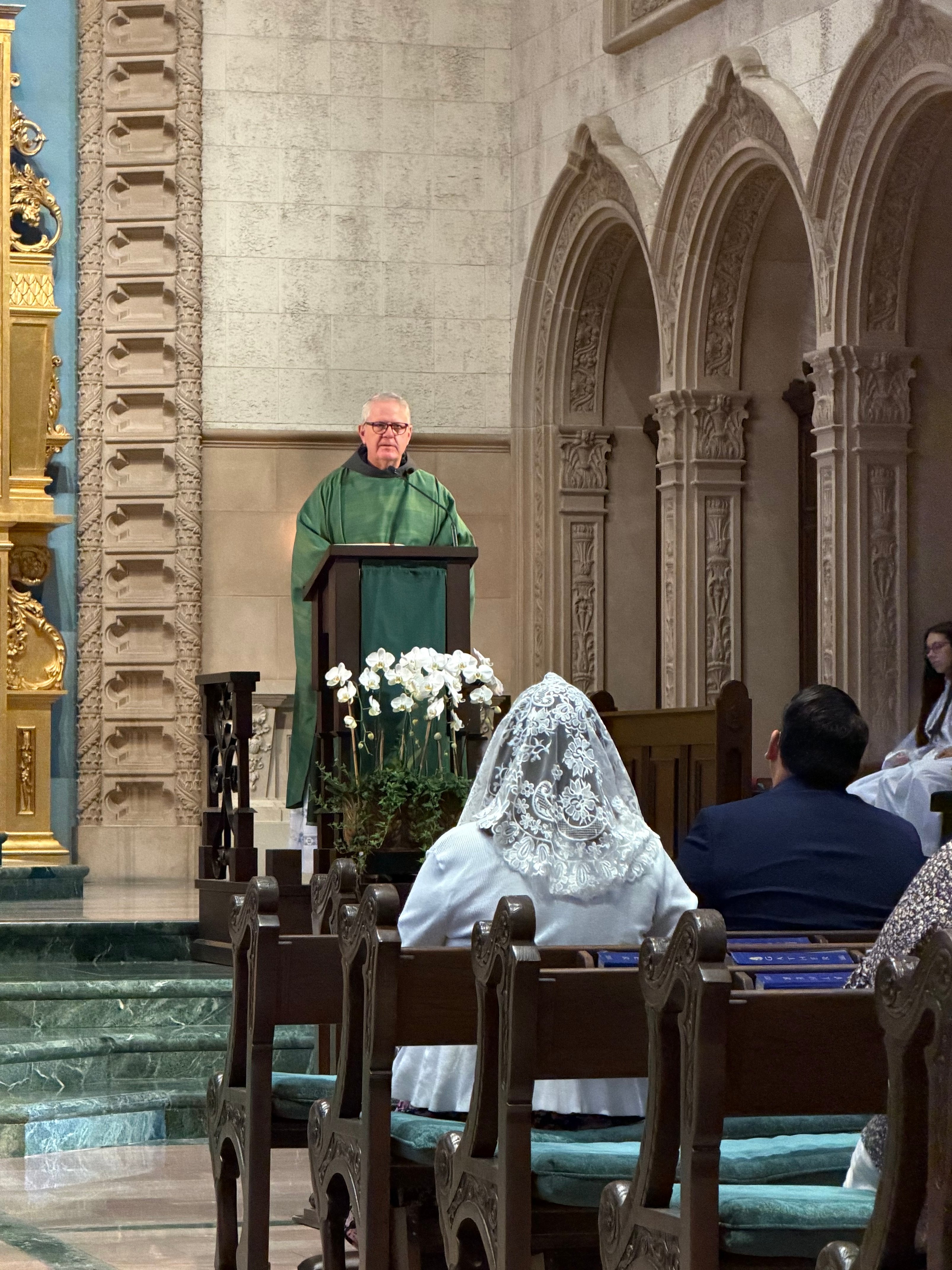
The goal is not simply belonging. The goal is missionary discipleship.
While much of the conference focused on listening and accompaniment, the conversation did not end there.
The framework is not simply Listen and Teach. It is Listen, Teach, Send.
Bishop Martin challenged attendees to think beyond maintaining ministry as it currently exists. One comment in particular drew immediate attention from the room:
"Campus ministry should not be what it is today twenty years from now."
I appreciated that challenge because it pushes us to think beyond maintaining programs and traditions. The needs of students continue to change, and our methods must evolve if we hope to meet them where they are while remaining faithful to the Gospel.
Another theme that surfaced repeatedly throughout the conference was human dignity. Just days before Called26, Pope Leo XIV released Magnifica Humanitas, addressing the opportunities and challenges presented by artificial intelligence.
Artificial intelligence is rapidly changing how students learn, work, communicate, and even seek answers to life's biggest questions. It can be a powerful tool. But throughout the conference, speakers repeatedly pointed to its limits. Technology cannot accompany a student through grief. It cannot help someone discern a vocation. It cannot communicate, through genuine presence, that they are loved by God.
As Rosie reminded attendees, "the gospel has always been a place of good news precisely to answer the questions of this age that this world cannot answer."
Beneath all of these conversations was a truth the Church has proclaimed for centuries: every person possesses inherent dignity because they are created in the image and likeness of God.
Dr. Kenny Van Tilburg reminded attendees that Catholic social teaching begins with this simple but profound truth. Everything else flows from there.
A student's worth is not determined by grades, productivity, achievements, or how they compare to everyone around them. Their dignity is not something they earn. It is something they already possess as beloved children of God.
That truth matters because belonging is not the destination. It is the starting point.
Students are called to become missionary disciples who carry the Gospel into every corner of their lives.
Bishop Martin returned several times to the story of the disciples on the road to Emmaus, reminding attendees that ministry begins with our own encounter with Christ. His message was clear: before we can accompany others, we must first allow ourselves to be transformed by the Gospel.
Mission does not begin with programs. It begins with encounter. Students are far more likely to be transformed by someone whose life has been changed by Christ than by someone simply delivering information.
At its best, campus ministry helps students discover who God created them to be and equips them to live that calling wherever they go next.
Why This Matters
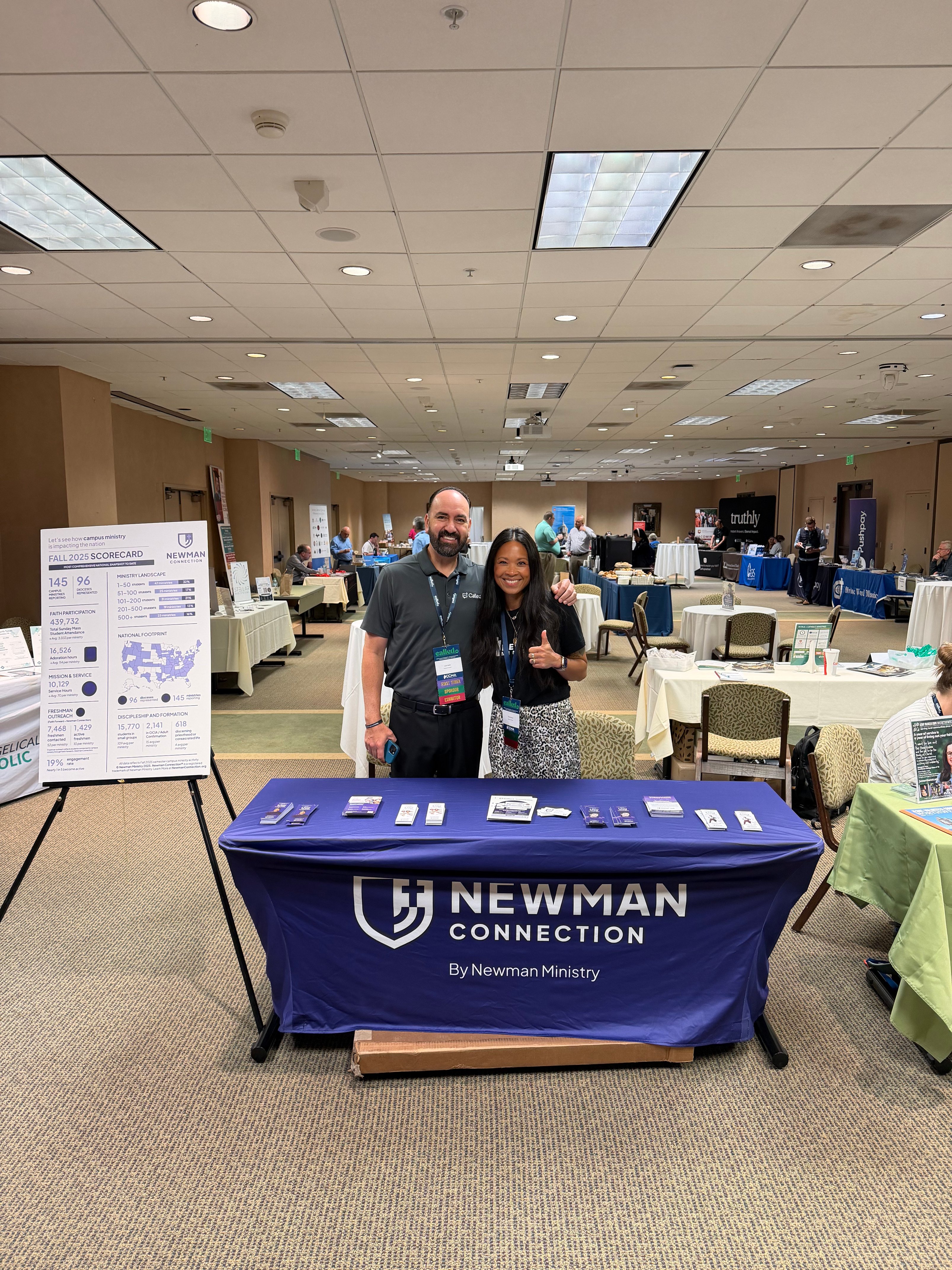
One of the things I love most about my role at Newman Connection is the opportunity to speak with campus ministers from every corner of the country. I hear stories from large universities and small colleges, from thriving ministries and struggling ministries, and from seasoned campus ministers as well as those just beginning their work.
While the details and challenges vary, one thing remains remarkably consistent: students are still searching, and campus ministers continue to show up.
They listen. They accompany. They encourage. They create spaces where students can encounter Christ, wrestle with life's biggest questions, and discover that they are not alone.
Called26 reminded me that while technology changes, culture shifts, and ministry challenges evolve, the heart of campus ministry remains the same. At its core, this work is about helping students discover that their worth is not based on what they achieve, but on who they are as beloved sons and daughters of God.
As long as young adults continue searching for meaning, belonging, and purpose, campus ministry will remain one of the Church's most important mission fields.